
A renovation is underway, the garage is full, and the items you need to protect are now competing for space with tools, materials, and daily life. This is where self storage rentals can make a practical difference. Rather than loading belongings or business stock into a vehicle and taking it to an off-site facility, portable storage brings a secure unit directly to your property.
For homeowners, contractors, retailers, and industrial operators, the right rental arrangement is less about finding empty square footage and more about making work easier. The unit should be accessible when you need it, placed where it supports the job, and rented for a timeline that reflects the reality of the project.
When self storage rentals are the practical choice
Traditional storage facilities work well when you have a small number of items and do not need frequent access. Portable self storage is often a better fit when the storage needs to stay close to the work or home. Having the unit on-site means fewer loading trips, less handling, and a clearer place for equipment, furniture, inventory, or seasonal items while space is being reorganized.
A homeowner may use a container to clear rooms during a kitchen or basement renovation. A contractor may keep tools and materials protected at an active job site. A retailer may need temporary capacity for seasonal inventory without crowding the sales floor or back room. In each case, the rental is serving a different purpose, but the value is the same: storage is available where the work is happening.
This approach can also help when timelines are uncertain. Construction schedules change, renovations take longer than expected, and businesses may experience short-term inventory increases. A rental arrangement with flexible terms gives you room to adjust without committing to more space or a longer period than you need.
Portable storage versus an off-site storage facility
The main difference is not simply the type of unit. It is the amount of time, handling, and coordination required to use it.
With an off-site facility, you typically pack items, arrange transportation, unload them at the facility, and repeat the process whenever something is needed. That may be perfectly reasonable for archives, collectibles, or items you rarely access. It becomes less convenient when you are working through a renovation, managing a job site, or regularly receiving stock.
A portable unit is delivered to your location, allowing you to load it at your pace. It stays on-site for the rental period, so access is close at hand. This can be especially useful in Eastern Ontario, where a trip to an off-site facility may add time to an already busy day.
There are trade-offs. An on-site container requires a suitable delivery and placement area, and municipal or property rules may affect where it can be positioned. If your property has limited access, a narrow driveway, or a shared commercial lot, discuss those details before booking. A dependable storage provider will help you consider the practical requirements early, rather than leaving surprises for delivery day.
Plan your rental around the work, not just the space
The best storage rental is sized and arranged around how you will use it. Before requesting a quote, think about what is going into the unit, how often you will need access, and where it can be placed safely.
Choose a location that keeps access simple
A container should be placed on a stable, reasonably level surface with enough room for delivery equipment to access the site. Consider the path from the building to the unit. A shorter, clear path reduces the effort of loading heavy boxes, tools, fixtures, or inventory.
For commercial properties, placement should also account for customer parking, shipping lanes, staff access, and safety requirements. On a job site, avoid locations that interfere with equipment, material deliveries, or the next stage of work. The most convenient spot is not always the closest one if it creates congestion.
Estimate size based on what stays accessible
It is tempting to focus only on fitting everything inside. A better question is whether you will be able to reach what you need later. If the unit will hold items for several months without regular access, efficient packing may be the priority. If it will store contractor tools or retail inventory that changes every week, leave a centre aisle and keep frequently used items near the door.
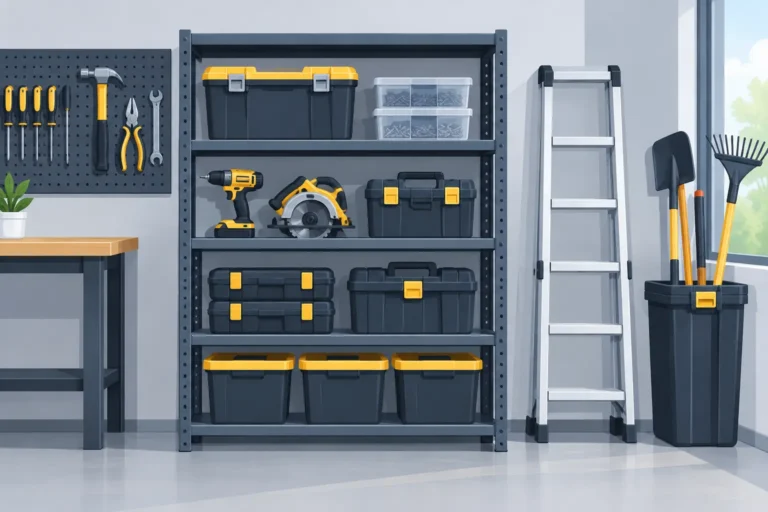
Stack boxes with heavier items at the bottom, label each side that faces the aisle, and avoid storing essential items behind bulky furniture or pallets. Shelving may be useful for smaller commercial supplies, provided it is stable and appropriate for the unit.
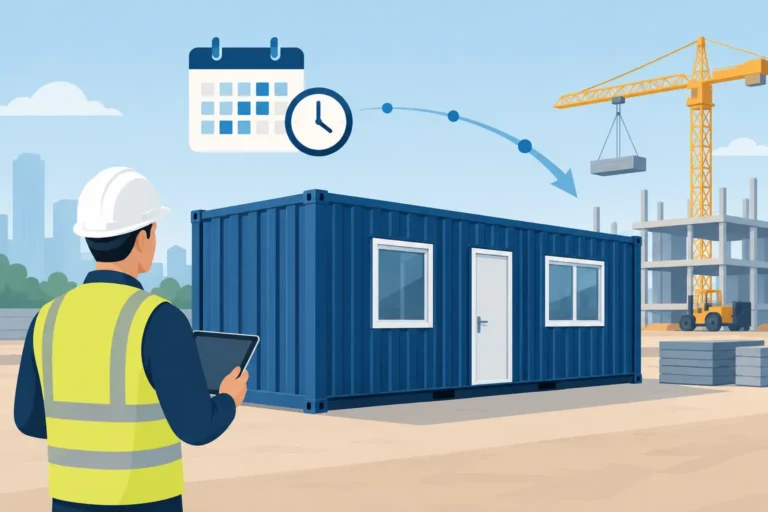
Rental length matters as well. Short-term storage can help keep a project organized during a defined phase of work. Longer-term storage can provide dependable overflow capacity for a business that has outgrown its current footprint. Ask about rental terms that match your expected timeline, while allowing for reasonable changes if the project extends.
Store with protection and security in mind
Good storage starts with the condition of the unit and continues with how it is packed. Use clean, sturdy boxes, keep sensitive items off the floor where appropriate, and protect furniture or finished materials with suitable coverings. Avoid storing prohibited, hazardous, perishable, or flammable goods. If you are uncertain about an item, ask before loading it.
Security also depends on daily habits. Keep the unit locked whenever it is not in use, limit key or access-code sharing, and avoid leaving valuable tools in plain view while loading. For business users, assigning access responsibility to specific staff members can prevent confusion and make inventory control easier.
Self storage rentals for business and industrial work
For a business, storage is often an operational decision rather than a household one. An on-site container can provide a temporary stockroom during a renovation, a secure place for event materials, or extra capacity during a busy sales period. It may also reduce clutter in work areas that need to stay clear for staff and customers.
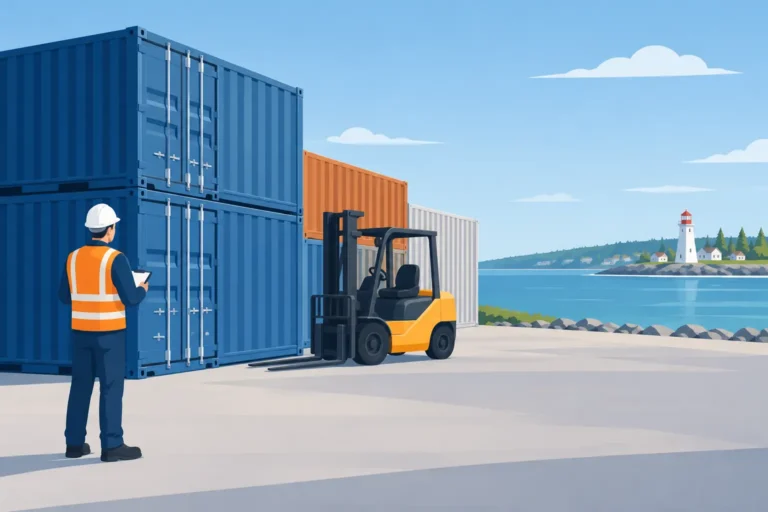
Contractors and industrial operators can use portable storage to keep tools, consumables, safety supplies, and project materials close to the site. This supports faster access at the beginning and end of the workday while helping protect equipment from unnecessary exposure. The exact setup depends on the project: a landscaping crew may need frequent access to equipment, while a construction project may need a protected holding area for materials awaiting installation.
For recurring needs, consider whether storage should be treated as part of your operating plan rather than an emergency fix. A well-placed rental can create useful breathing room during expansion, seasonal demand, or facility improvements without the cost and disruption of adding permanent space.
When portable storage may not be the right fit
Portable storage is not the answer to every storage problem. If you need climate-controlled conditions for highly sensitive records, artwork, electronics, or specialty products, an on-site container may not meet your requirements. Likewise, if local rules or site conditions prevent safe delivery and placement, an off-site option could be more suitable.
It is also worth considering access patterns. If many employees need frequent entry, a dedicated warehouse arrangement may offer better workflow. If you only need to store a few small items for a long period and have no space for a container, a conventional self-storage unit may be the simpler choice.
The goal is not to choose the largest unit or the longest rental. It is to choose a storage format that reduces work, protects what matters, and fits the property you have.
Get storage that works where you work
For customers in Kingston and across Eastern Ontario, GoBox Portable Storage provides on-site container rentals for residential, commercial, and industrial needs. A quick conversation about your location, access, contents, and expected timeline can help identify a practical setup before the container arrives.
Storage should make a renovation, project, or busy season easier to manage. When the unit is delivered to your location and planned around the way you actually work, it can do exactly that.