A drill left in a damp corner, a saw blade stacked under lumber, or extension cords tangled at the bottom of a trailer can cost time before work even begins. Knowing how to store construction tools properly protects expensive equipment, keeps crews productive, and makes a job site safer for everyone.
The right setup depends on the tools you own, how often they are used, and whether they need to stay at one site or support work across several locations. The goal is not a picture-perfect workshop. It is a practical system where tools stay dry, organized, secure, and easy to access when the day starts.
Start With the Conditions, Not the Containers
Before buying shelving or bins, look at the environment where your tools will sit. Moisture, dirt, temperature swings, and unauthorized access cause more damage than most storage systems can solve on their own.
Construction tools should be stored in a dry, enclosed space with a solid floor and reliable doors. Keeping equipment off bare ground is especially important during wet weather. Even a small amount of standing water or ground moisture can affect tool cases, metal components, batteries, and boxed supplies.
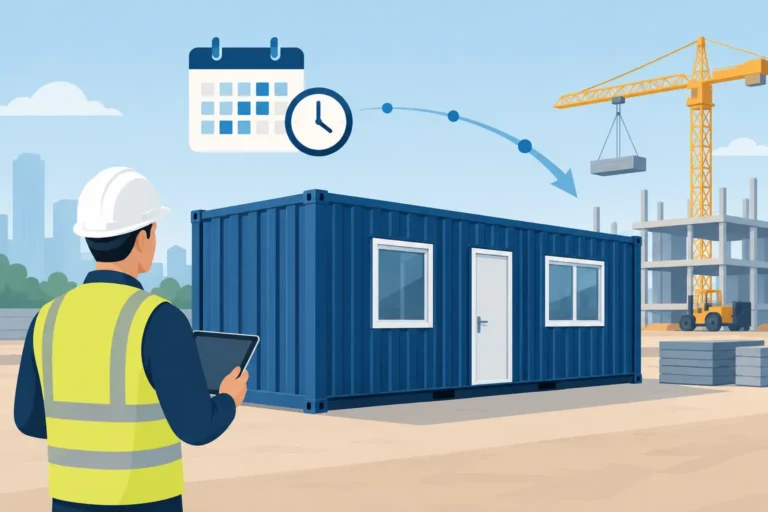
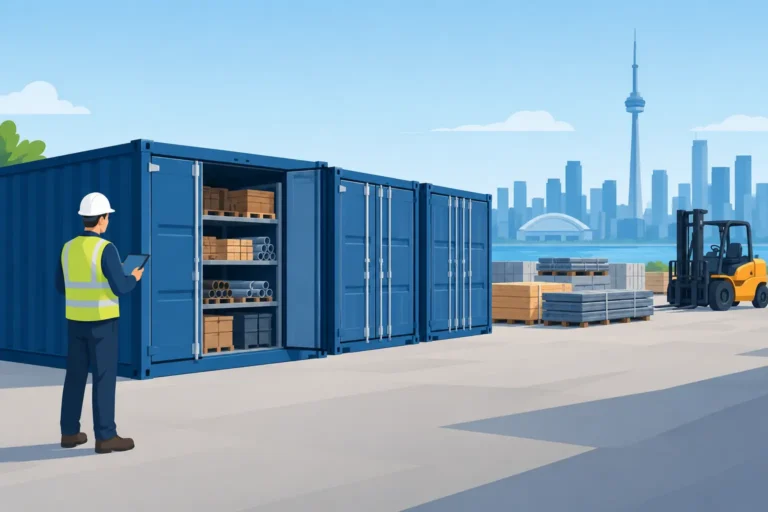
A portable storage container can be a practical option for contractors who need secure storage at the job site without sending tools back and forth each day. In Eastern Ontario, where weather can shift quickly between seasons, an enclosed unit also provides useful protection from rain, snow, road salt, and windblown debris.
Ventilation matters, but it needs to be balanced with security and weather protection. If damp tools are sealed into a space after a rainy day, condensation can build up. Wipe down wet equipment before storing it, leave tool cases open briefly to air out when appropriate, and avoid packing materials tightly against cold metal walls.
Create Zones for How Tools Are Actually Used
The fastest storage system is one that follows the rhythm of the work. Grouping tools by type is helpful, but grouping them by task can be even better. For example, the equipment used for framing, electrical work, finishing, and site cleanup may each need its own designated area.
Keep daily-use items close to the entrance. That may include drills, drivers, chargers, measuring tools, PPE, extension cords, and common hand tools. Equipment used less often, such as specialty saws or seasonal gear, can go farther back.
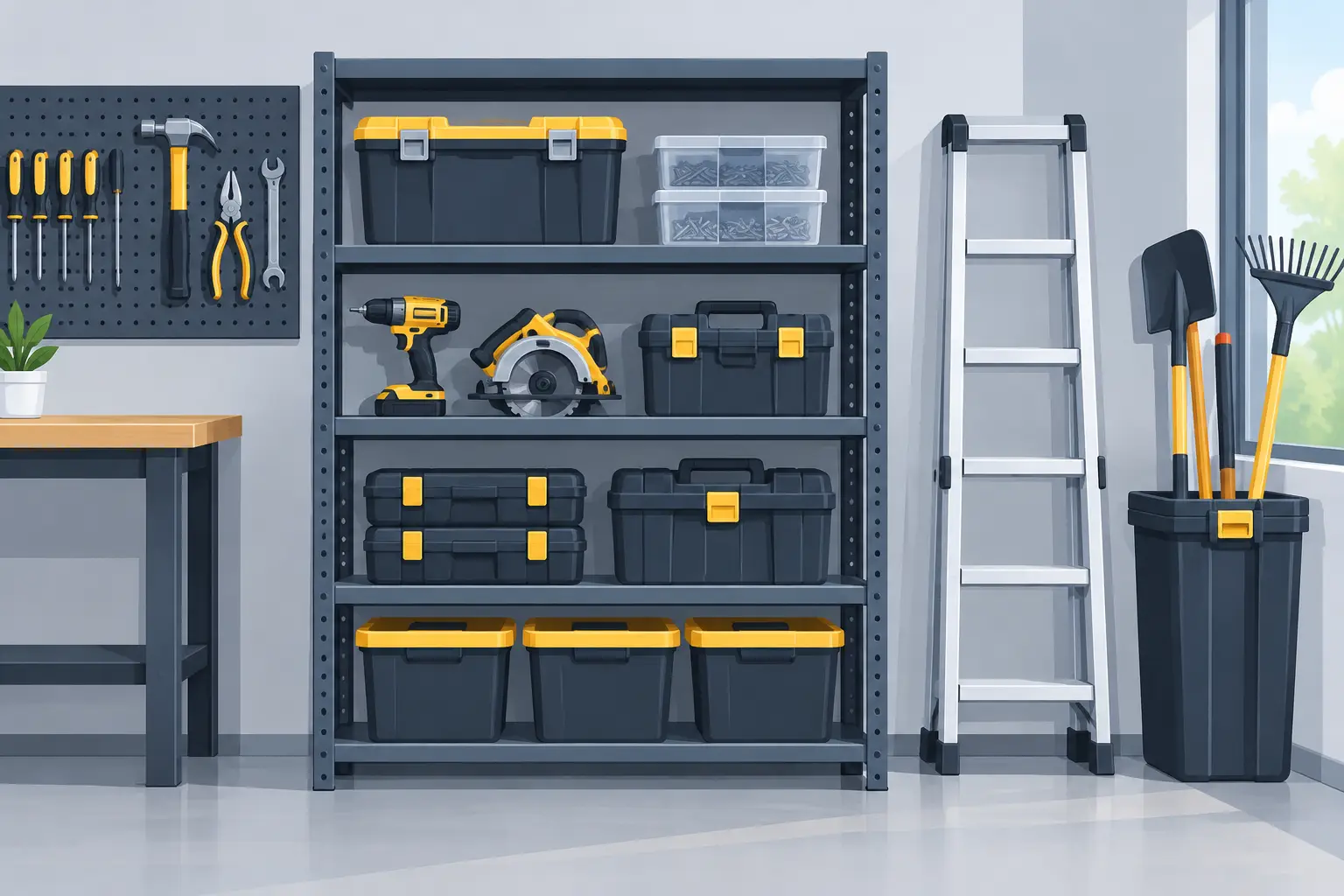
A simple zone plan often includes a front access area for frequently used tools, shelving along the walls for cases and supplies, a secure section for high-value equipment, and open floor space for larger items. Leave a clear path through the centre rather than filling every available square foot. A packed unit may hold more, but it slows down loading, retrieval, and inventory checks.
Keep Heavy Tools Low and Stable
Store generators, compressors, larger saws, and toolboxes on the floor or the lowest shelf level. This reduces the chance of injury and prevents shelves from becoming top-heavy. If a tool has wheels, lock them when possible or use blocks to keep it stable.
Avoid stacking heavy cases more than a few high. Cases can crack, latches can fail, and the tool needed most often inevitably ends up at the bottom. If vertical storage is necessary, use rated industrial shelving that is assembled on level ground and secured according to the manufacturer’s instructions.
Use Clear Labels That Hold Up on Site
Labels save time only when they can be read at a glance. Mark shelves, bins, and larger cases with clear, large lettering. Use labels that identify both the contents and the intended return location, such as “Electrical – hand tools” or “Finishing – fasteners.”
For shared equipment, consider assigning numbered cases or a simple sign-out sheet. This is particularly useful when several tradespeople access the same storage space. It creates accountability without turning tool control into a complicated process.
Protect Metal, Blades, and Precision Equipment
Many construction tools are built for tough conditions, but they still need basic care before storage. Dirt holds moisture, and moisture leads to corrosion. Take a few minutes at the end of the workday to brush off dust, wipe down metal surfaces, and clear debris from vents and guards.
Apply an appropriate rust-preventive product to bare metal hand tools, drill bits, saw blades, and other cutting accessories when they will be stored for an extended period. Keep blades in their original cases, blade guards, or dedicated sleeves. Tossing them loose into a bin dulls edges and creates a serious handling hazard.
Laser levels, measuring devices, and other precision tools should stay in protective cases whenever they are not in use. Store these cases on shelves instead of the floor, away from vibration and the risk of being buried under heavier equipment.
Store Batteries and Chargers With Care
Cordless tools are only useful when batteries are ready to work. Store batteries in a dry location away from direct heat, freezing conditions, metal debris, and loose fasteners. Keep battery contacts clean and use protective caps if they came with the battery.
It is generally best to avoid leaving batteries on chargers indefinitely. Follow the manufacturer’s guidance for charging and long-term storage, since requirements vary by battery type and brand. A dedicated charging shelf with a power bar, cable management, and clear space around chargers helps keep this area organized.
Do not store damaged batteries with working ones. Swelling, cracked housings, leaks, unusual heat, or a burnt smell are signs that a battery needs attention. Isolate it in accordance with the manufacturer’s safety instructions and arrange proper disposal through an approved program.
Secure High-Value Tools Without Hiding Them
Security is about layers. A locked storage unit is the first layer, but it should not be the only one. Keep high-value tools in locked cabinets, job boxes, or secured cases inside the unit. This adds protection and makes it harder for someone to quickly identify and take the most valuable items.
Maintain a current inventory with tool descriptions, serial numbers, and photos. A basic spreadsheet or inventory app is enough for many contractors. Update it when new equipment arrives and review it regularly. This record supports insurance claims and makes it easier to spot missing tools early.
Avoid placing expensive equipment where it is immediately visible when doors are opened. Arrange the layout so valuable items are farther inside or behind an additional locked barrier. Good exterior lighting and a storage location that is visible from the active work area can also discourage theft.
Keep Fuel, Chemicals, and Tools Separate
Fuel-powered equipment needs extra planning. Gasoline, propane, solvents, paints, adhesives, and other chemicals should never be treated like ordinary tool storage. Their storage requirements vary, and some materials may not be suitable for an enclosed container at all.
Check product labels, safety data sheets, workplace rules, and local fire requirements before storing any hazardous product. Keep chemicals in approved containers, away from ignition sources, and separate from batteries, chargers, cutting tools, and absorbent materials. Never assume that a locked space automatically makes hazardous materials safe to store.
For many teams, the most practical approach is to keep only the quantities needed for the immediate job and use a compliant dedicated storage method for the rest.
Make a Weekly Reset Part of the Routine
Tool storage breaks down when everyone is busy. A short weekly reset prevents the usual problems: missing batteries, damaged cords, empty fastener bins, dull blades, and equipment left exposed at the end of the day.
Set aside time to return tools to their zones, inspect cases and locks, sweep out dust, and check for water entry or condensation. Reorder consumables before they become an urgent shortage. This routine also gives you a chance to remove broken equipment from service before it becomes a safety issue.
For contractors and property owners who need protected storage right where work is happening, GoBox Portable Storage provides delivered storage units that can keep equipment close, organized, and out of the weather. The right storage space is not just somewhere to put tools. It is a dependable part of a safer, more efficient workday.