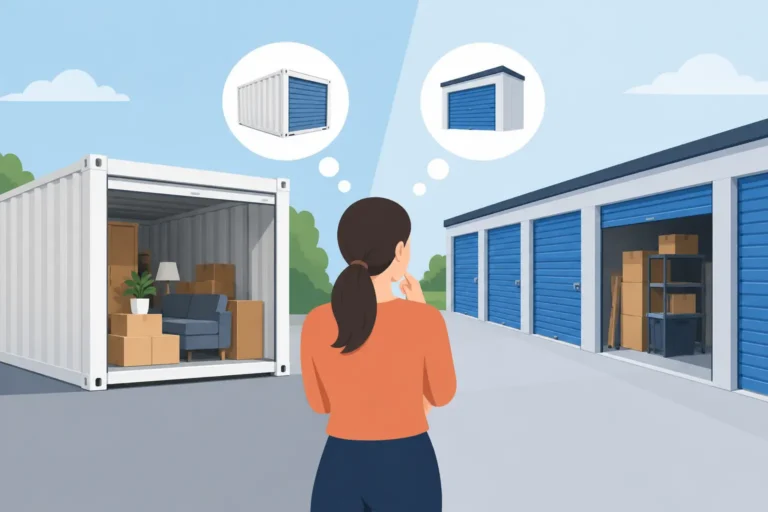
A portable storage unit size guide should start with your actual project, not a guess based on how much space looks available in the driveway. The right unit needs to hold your belongings or materials safely, fit the delivery location, and leave enough room for practical access while you are using it.
For a kitchen renovation, a compact unit may be enough for furniture and boxed household items. For a contractor holding tools, materials, and equipment at a job site, a larger footprint may prevent costly overcrowding. The best choice depends on what you need to store, how long it will remain on site, and how often you will need to get inside.
Start With What You Need to Store
Before comparing unit dimensions, separate your items by size, weight, and frequency of use. Large, bulky pieces take up floor space quickly. Boxes can be stacked efficiently, but only when they are packed consistently and are not too heavy for the items below them.
A useful way to estimate capacity is to picture the contents of each room, work area, or inventory section. Then account for items that cannot be stacked, such as appliances, workbenches, shelving, long materials, or equipment with awkward shapes. These items often determine the unit size more than the total number of boxes.
For residential projects, consider furniture, seasonal items, appliances, décor, and the contents of closets or storage rooms. For commercial and industrial use, include pallets, racking, tools, product inventory, packaging supplies, and any safety clearance required for handling materials.
Do not plan for a unit that is full from wall to wall. A little unused room can make a major difference when you need to retrieve one item without unloading half the contents.
Portable Storage Unit Size Guide: Common Options
Portable storage units are often measured by length, with width and height varying by container type. Interior dimensions are more useful than exterior measurements, since door frames, wall construction, and floor structure reduce usable space. Always confirm the exact dimensions and weight limits of the unit you are renting.
The following examples provide a practical starting point for estimating space:
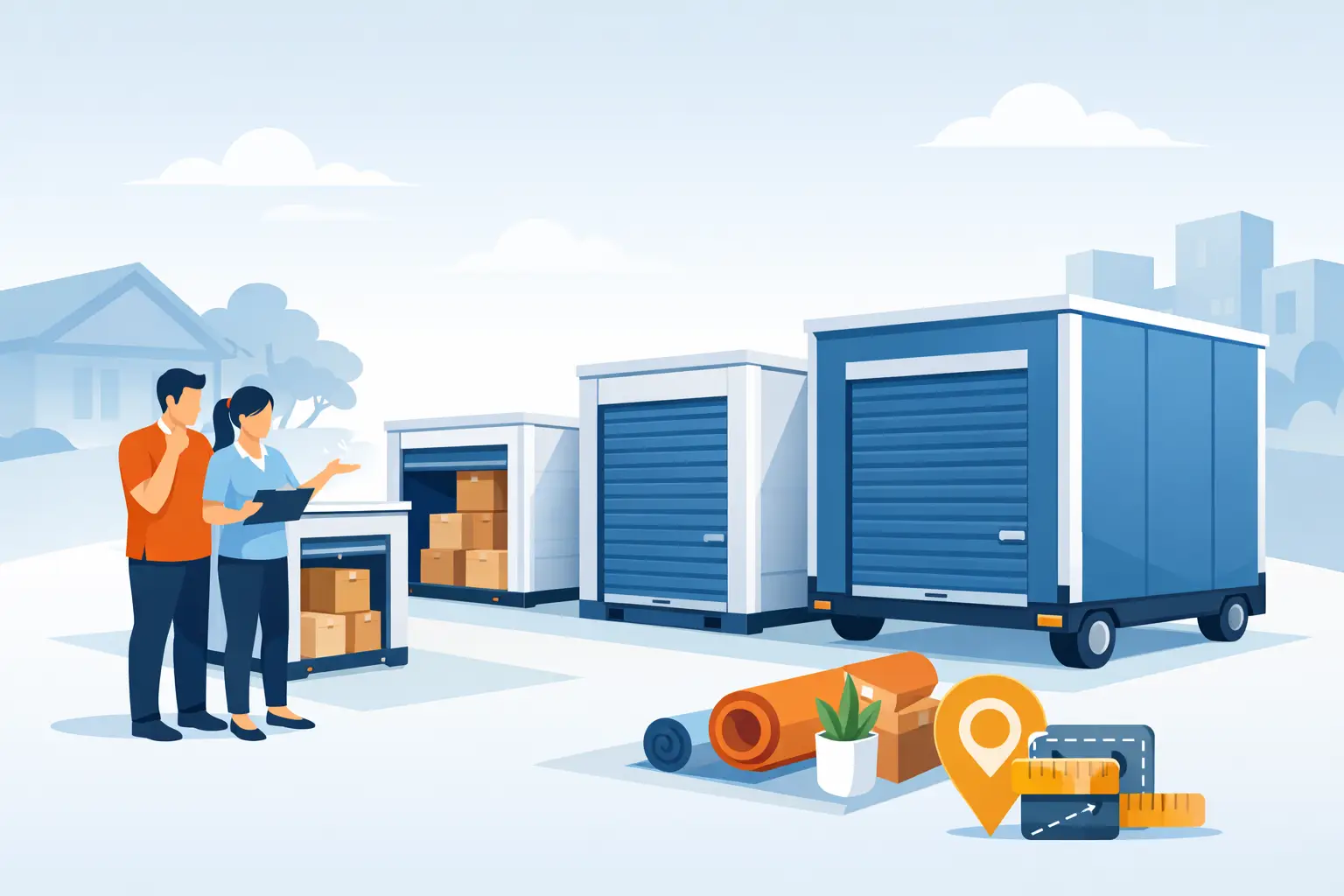
| Unit length | Best suited to | What to consider | |—|—|—| | Approximately 10 feet | Small renovation projects, seasonal storage, compact retail overflow, or tools and supplies | Works well for a limited volume, but fills quickly with bulky furniture or equipment. | | Approximately 20 feet | Multi-room household storage, contractor materials, business inventory, and longer projects | Often provides a strong balance of capacity and on-site footprint. | | Approximately 40 feet | Large commercial inventory, industrial equipment, extensive construction materials, or long-term operational storage | Requires substantially more delivery and placement room. |
Length alone does not tell the full story. A 20-foot unit with a standard width and height may hold a considerable amount of boxed goods, but long items, oversized furniture, and palletized inventory can reduce usable capacity quickly. The door opening also matters. If you need to load wide equipment or large crates, check that the opening provides enough clearance.
Think in Floor Space, Not Just Cubic Space
Storage providers may describe capacity in cubic feet, but floor space is usually the more practical measure. You can stack boxes upward. You cannot stack a sofa on top of a worktable, or safely place heavy tools over fragile inventory.
Start by identifying items that must sit on the floor. Arrange those pieces along the walls where possible. Then estimate how many rows of boxes, bins, or materials can fit between them. This gives you a more realistic picture of capacity than a total volume number.
For example, a homeowner storing a dining table, chairs, several shelving units, and boxed kitchen contents may need a longer unit than expected because the furniture creates gaps. A retailer storing uniform cartons may fit more into the same space because the cartons stack neatly and can be arranged in consistent rows.
Height still matters, particularly for lightweight boxes, shelving, and seasonal items. Use it carefully. Heavy boxes should stay low, and no stack should be high enough to become unstable when a door is opened or an item is pulled out.
Leave a Clear Access Path
A unit that holds everything is not necessarily the right unit if no one can reach what is inside. If you will only load the unit once and leave it closed for several weeks, you can use the full space more tightly. If you will regularly retrieve materials, inventory, tools, or household items, plan an aisle from the doors to the back.
For business storage, place frequently used products close to the doors and label each section clearly. Contractors can keep daily-use tools within easy reach while placing bulk supplies farther inside. At home, keep documents, seasonal items that may be needed soon, and essential appliances near the entrance.
An access aisle uses capacity, but it saves time and reduces the chance of damage from repeated unloading and reloading. In many cases, selecting the next size up is more practical than packing a smaller unit to its absolute limit.
Check Your Site Before Booking
Portable storage is delivered to your location, so unit size must work at the site as well as inside the unit. Measure the intended placement area and consider the full delivery route. A unit may fit in a driveway or yard but still be difficult to place if there are low branches, overhead wires, narrow turns, parked vehicles, gates, or soft ground.
Consider the surface too. A level, firm area helps keep the unit stable and allows doors to operate properly. If the ground slopes, becomes muddy after rain, or has limited clearance, discuss the site conditions before delivery. This is especially relevant for job sites, rural properties, and properties with restricted access.
You should also think about the unit door direction. Placing the doors toward a clear work area, garage, shop entrance, or inventory receiving area can make daily use much easier. A few minutes of planning can prevent weeks of awkward access.
Allow for Project Changes
Storage needs often grow after a project begins. A renovation may reveal more items that need protection. A retailer may receive a larger-than-expected shipment. A contractor may need to secure additional materials between phases of work.
When your timeline is uncertain, choosing a unit with some extra capacity is often a sensible decision. It gives you room for unexpected items and reduces the risk of having to reorganize a packed unit under pressure. The trade-off is a larger on-site footprint, so balance flexibility against the space available at your property.
For longer rentals, think beyond the first day of loading. Will the contents change with the seasons? Will your team need regular access? Are you likely to add shelving, palletized goods, or more equipment later? These questions can point you toward a size that supports the full project rather than only its starting point.
Pack for the Size You Choose
Good packing can make a properly sized unit work far better. Use sturdy boxes of similar dimensions where possible, label every side that may face the aisle, and keep heavy items at floor level. Protect furniture and equipment from scratches by using covers, pads, or appropriate wrapping.
Create a simple loading plan before you begin. Place large, infrequently used items first, then build stable box stacks around them. Keep delicate items away from heavy loads and avoid putting pressure on doors. For commercial stock, use clear categories and maintain a basic inventory list so staff know what is inside.
If you are unsure whether your project calls for a compact, standard, or larger unit, describe the items, site conditions, and access needs when requesting a quote. GoBox Portable Storage can help customers in Eastern Ontario choose an on-site storage option that fits the work at hand.
The right size is the one that gives your items a secure place to stay while still leaving enough room to work around them comfortably.