A container placed at your home, retail site, or job site can keep valuable belongings close at hand. But are shipping containers rodent proof? Not completely. A well-maintained steel container is far harder for rodents to enter than a shed, garage, or wooden storage structure, but its protection depends on its condition, door seals, ventilation points, and how it is used.
For homeowners and businesses across Eastern Ontario, the practical goal is not to assume a container is automatically pest-proof. It is to choose a quality unit, inspect it before loading, and avoid creating the food, shelter, and moisture conditions that attract rodents in the first place.
Are Shipping Containers Rodent Proof by Design?
Shipping containers are built from heavy steel, which gives them a clear advantage over many other storage options. Rats and mice cannot chew through sound steel walls, steel flooring supports, or properly closed cargo doors. This makes a container a strong physical barrier when compared with structures made of wood, vinyl, or thin plastic.
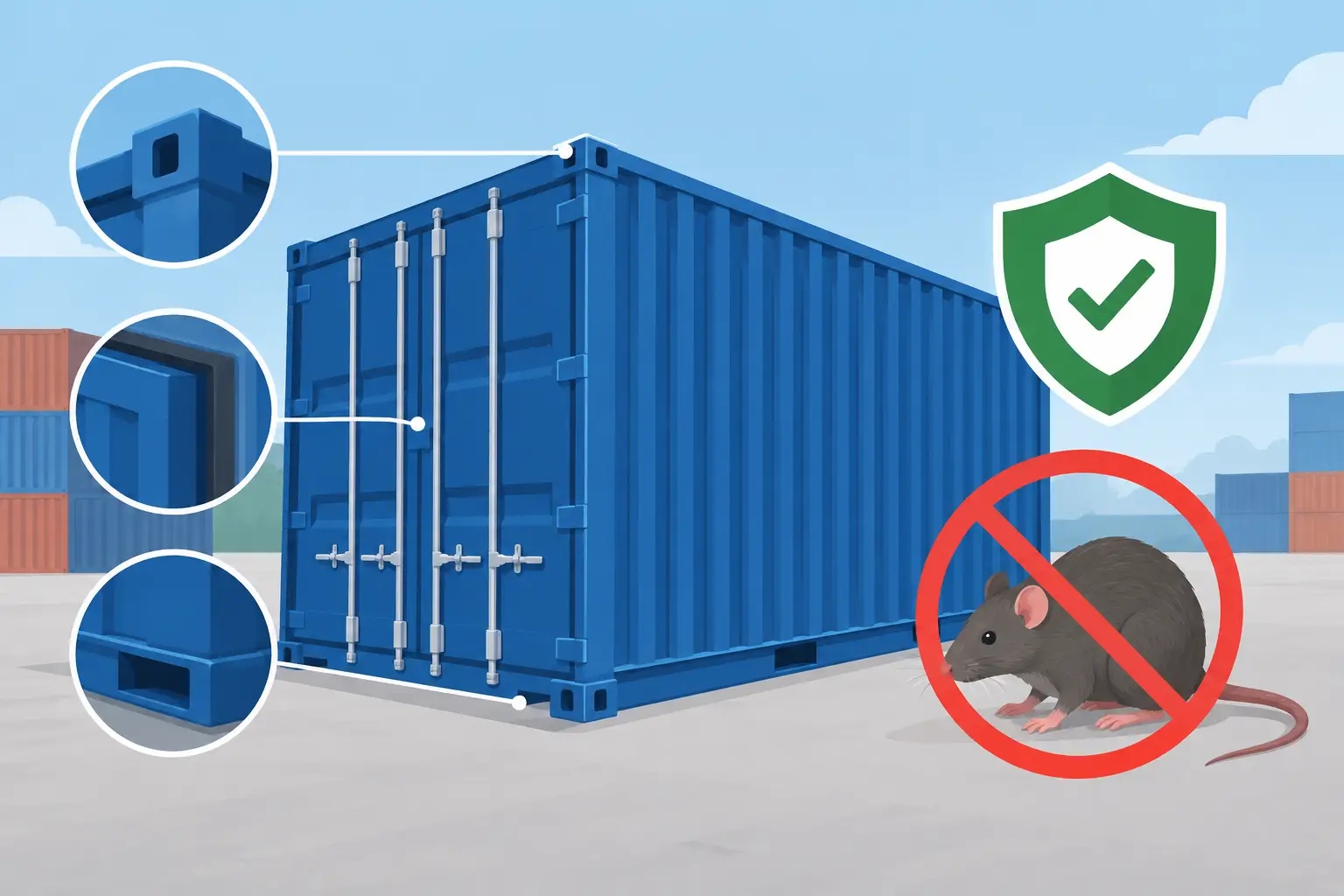
Still, rodent-proof and rodent-resistant are not the same thing. Rodents do not need to chew through the side of a container if they can find a small opening around a damaged door gasket, a worn floor corner, a vent, a utility opening, or a corrosion hole. Mice can fit through surprisingly narrow gaps, particularly around the bottom and sides of a door.
Containers also have ventilation features. These are necessary to help manage airflow, but they must be properly designed and maintained. A vent opening with damaged mesh or an altered wall panel can create an access point that is easy to overlook during loading.
The condition of the individual unit matters more than the fact that it is made of steel. A clean, structurally sound rental container with functioning door seals provides a much better defence than an older unit with neglected repairs.
Where Rodents Usually Find a Way In
Most pest issues start at the edges, not in the middle of a container wall. Door gaskets are one of the first places to check. The rubber seals around cargo doors should make consistent contact when the doors are shut. If a seal is torn, flattened, detached, or obstructed by debris, it can leave a gap large enough for a mouse.
Flooring deserves attention too. Many containers use thick wood flooring supported by a steel frame. The floor itself is durable, but prolonged moisture exposure, damage from prior use, or gaps around interior corners can weaken the barrier. Look for soft spots, visible daylight, or damaged areas before placing boxes and equipment inside.
Exterior alterations should also be considered. A storage unit with added wiring holes, cut-outs, vents, or other modifications needs a careful inspection. Any opening that does not have a properly fitted cover or fine metal screening can become a possible entry point.
Finally, rodents may nest underneath or beside a container without getting inside. That does not mean the storage space has failed, but it does mean the surrounding area needs attention. Long grass, stacked pallets, scrap material, and garbage placed beside the unit give pests cover and make regular checks more difficult.
Moisture Can Make a Rodent Problem Worse
Rodents seek dry shelter, but moisture can turn a minor access issue into a larger storage problem. Condensation may form when outdoor temperatures change quickly, especially during an Ontario winter or a humid summer stretch. Damp cardboard, fabric, paper products, and stored food can create appealing nesting material and odours.
Keep stored items raised off the floor where practical. Pallets, shelving, or dunnage boards improve airflow and make it easier to inspect behind and beneath stored goods. Leave a narrow aisle down the centre of the container instead of packing every wall tightly. This gives you a clear line of sight for a quick check and helps identify a leak or pest concern early.
Avoid storing anything with food residue, including unwashed recycling, pet food, bird seed, animal feed, or opened pantry goods. Even sealed bags can attract rodents through scent. If a business is using on-site storage for packaged inventory, keep food-related stock in tightly sealed, pest-resistant containers and inspect packaging regularly.
How to Make On-Site Storage Less Attractive to Rodents
The best prevention is a combination of container condition and site housekeeping. Before loading, inspect the door seals, floor, corners, vents, and exterior walls. Close both doors and look for uneven gaps. If anything appears damaged, report it to the storage provider before placing your belongings inside.
Once the unit is in place, keep the area around it clear. Trim vegetation near the container and avoid leaning lumber, boxes, ladders, or tarps against the exterior. These items can give rodents a sheltered route to the door area and can hold moisture against the steel.
A few simple practices make a meaningful difference:
- Keep food, feed, scented candles, soap, and garbage out of the container whenever possible.
- Use clean plastic totes with secure lids for textiles, documents, and seasonal household items.
- Store cartons on pallets or shelving rather than directly on the floor.
- Check door gaskets and interior corners each time you access the unit.
- Address signs of rodents quickly, including droppings, gnaw marks, nesting material, or damaged packaging.
For commercial and industrial sites, designate one person to complete regular inspections. This is especially useful when several employees access stored materials or when a unit holds inventory, tools, supplies, or records over a longer period.
What to Do If You Notice Signs of Rodents
Do not ignore a small sign just because the container is steel. A few droppings near a door, torn cardboard, or disturbed insulation can indicate an opening that needs attention. First, identify whether the issue is inside the container, around its exterior, or both.
Protect yourself when handling contaminated materials. Wear gloves, avoid sweeping dry droppings into the air, and follow appropriate cleaning guidance for the material involved. Isolate damaged boxes or goods, then inspect nearby areas carefully. If the container has a damaged gasket, vent cover, or visible gap, notify the rental provider promptly so the issue can be assessed.
For an active pest issue, a licensed pest control professional can identify the source and recommend appropriate treatment for the property. Traps and bait stations may be useful, but their placement should be planned carefully, particularly around children, pets, customers, and work crews.
Choosing a Container With Pest Prevention in Mind
When arranging portable storage, ask about the unit’s condition, door function, and inspection process. You do not need a laboratory-grade sealed space for most household, retail, and job-site storage needs. You do need a clean, well-maintained container with doors that close properly and no obvious damage that could create a gap.
A local provider can also help you choose a practical placement location. A level, accessible area with reasonable clearance around the unit makes inspections easier and discourages pests from settling unnoticed nearby. GoBox Portable Storage provides on-site container storage throughout Eastern Ontario, helping customers keep their belongings close while maintaining a secure, practical setup.
A steel container is one of the better choices for deterring rodents, but the strongest protection comes from pairing a sound unit with clean storage habits and regular checks. A few minutes spent inspecting seals, keeping food out, and maintaining clear space around the container can protect the contents for the full length of your rental.