A storage container may be available when you need it, but container delivery timing still depends on one practical question: can the delivery vehicle safely place it where it needs to go? A clear plan for access, placement, and your rental start date helps prevent avoidable delays and gives you useful storage right when your project calls for it.
For homeowners, contractors, retailers, and property managers, timing is about more than choosing a date on a calendar. It means allowing enough time to prepare the site, confirming there is a suitable placement area, and considering weather, road conditions, and the work happening around the property. A little preparation makes delivery day straightforward.
What affects container delivery timing?
The best delivery date is the one that matches both your schedule and the realities of the site. Demand can change by season, particularly during busy construction periods and months when households are tackling major renovations or reorganizing their space. Booking as early as practical gives you more flexibility around preferred dates and delivery windows.
Container availability and rental demand
If your project has a firm start date, request a quote and discuss delivery as soon as you know you will need storage. This is particularly helpful when you need several units, require a specific container size, or are coordinating storage with contractors, suppliers, or staff.
Availability is only one part of the equation. The unit also needs to be scheduled with a delivery vehicle and driver serving your area. Local service matters here because a provider familiar with Eastern Ontario can better account for travel distances, rural properties, and typical road conditions in the region.
Delivery access at your property
A container delivery truck needs a safe route to the placement area. Narrow entrances, low branches, overhead wires, sharp turns, soft shoulders, parked vehicles, and uneven ground can all affect how and when a container can be delivered.
Before confirming a date, look at the full approach from the road to the proposed location. The truck needs enough width and height clearance, plus room to position the unit without blocking traffic or damaging the property. If access is tight, a quick conversation with the storage provider before delivery is much better than discovering an issue when the truck arrives.
Ground conditions and placement
The container should sit on level, firm ground that can support its weight when loaded. Gravel, asphalt, concrete, and well-compacted ground are commonly suitable options, depending on site conditions. Wet grass, loose soil, or a sloped area may create challenges, especially after heavy rain or during spring thaw.
Choose the placement surface with the full rental period in mind. A location that looks acceptable on a dry day may be less workable after rain, snowmelt, or repeated vehicle traffic. It is also wise to leave room around the doors so people can load, organize, and retrieve items safely.
How far ahead should you schedule delivery?
There is no single lead time that suits every project. A homeowner preparing for a renovation may only need one container for a few weeks, while a contractor may require secure on-site storage through several project stages. The more fixed your deadline, the earlier you should arrange delivery.
As a practical rule, contact a local provider when your project dates become reasonably clear. Early notice gives you time to confirm access, select the right unit, and adjust the schedule if weather or site work changes. If you need storage quickly, it is still worth asking about the next available delivery date. A local company may be able to offer options that fit.
Plan around other site activity
Delivery works best when the placement area is open and the access route is clear. Avoid scheduling delivery at the same time as material drop-offs, paving work, large waste bins, landscaping crews, or other activities that could block the driveway or work area.
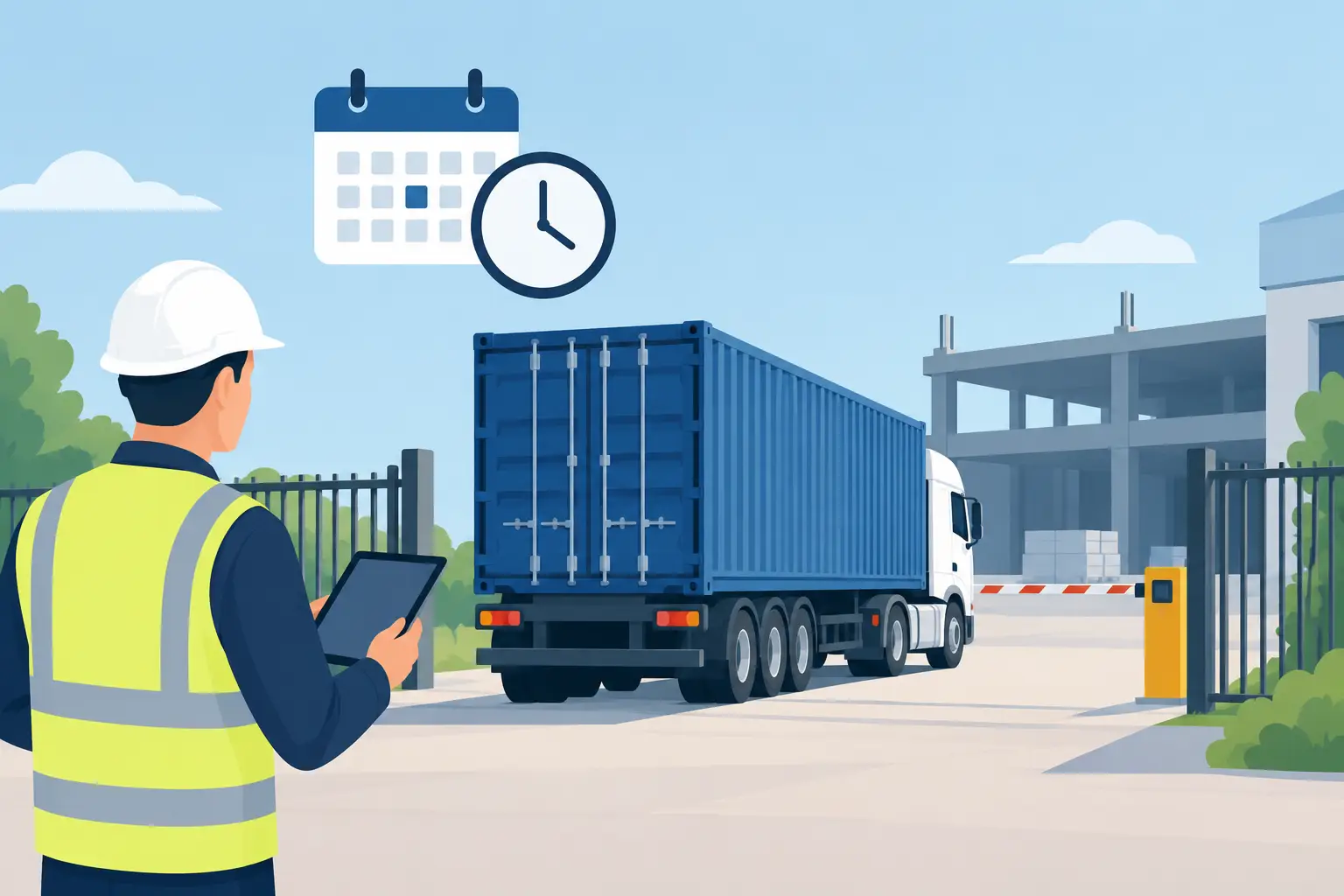
For commercial and industrial sites, let the relevant staff know the expected arrival window. Gates should be unlocked, loading areas cleared, and a site contact available to answer questions. This small amount of coordination helps the driver place the container efficiently and lets your team start using it sooner.
Consider permits and property rules
Some properties may have local requirements, condominium rules, landlord conditions, or site-specific safety policies that affect where a container can be placed. These requirements vary, so check them before finalizing your location and delivery date.
This is especially relevant if the unit might sit near a street, shared lane, fire route, loading area, or public-facing business entrance. Knowing the rules early protects your schedule from last-minute changes and ensures the container remains where it is most useful.
Seasonal factors for container delivery timing
Eastern Ontario weather can influence site access more than many people expect. Winter snowbanks can narrow driveways and conceal obstacles. Spring thaw can soften gravel lanes and lawns. Heavy rain may affect unpaved access routes, while summer construction activity can create temporary road restrictions.
Weather does not automatically prevent delivery, but it can change the safest approach or placement option. Keep an eye on the forecast in the days before your scheduled date and advise your provider if conditions at the property have changed. Photos of the access route can also help clarify a concern before the truck is dispatched.
Winter deliveries
Clear snow and ice from the driveway, gate area, and intended placement surface. Make sure the driver can identify edges, curbs, culverts, and other features that snow may hide. If snowbanks have reduced the usable width of your entrance, arrange to have them cleared before delivery.
Wet-weather and spring conditions
After rain or snowmelt, avoid directing a heavy vehicle across ground that has become soft or rutted. If the preferred location is no longer firm enough, ask whether a nearby hard surface is a better temporary option. A practical adjustment before delivery can protect both your property and the schedule.
Preparing for delivery day
The day before delivery, take a final look at the route from the road to the container location. Relocate vehicles, trailers, equipment, and other obstacles. Trim or identify low-hanging branches where appropriate, and make sure gates can open fully.
It also helps to decide which way the container doors should face. Door direction affects daily access, loading flow, and safety. For a renovation, doors facing the work area may be most convenient. For business inventory, doors positioned toward a receiving area may save time for staff. Mention your preference before placement begins, since repositioning a loaded container later is not a simple task.
If someone else will be meeting the driver, share the plan with them in advance. They should know the agreed placement area, have a working phone, and be able to identify any site hazards. Clear communication keeps a routine delivery from becoming a long wait at the curb.
Set the schedule around the work that matters
Storage should reduce pressure on your project, not create another logistical problem. At GoBox Portable Storage, the goal is to bring secure storage to your location on a schedule that supports how you actually use the space.
When you plan container delivery timing early, prepare a safe placement area, and stay realistic about seasonal conditions, you give yourself more control over the days ahead. If your project date is approaching, a quote request is a practical first step toward reserving the storage space you need.