A trailer packed with tools, materials stored in three different places, and a crew waiting while someone retrieves a missing item can turn a productive day into an expensive one. The best storage options for contractors reduce those gaps by keeping equipment, supplies, and inventory where the work is happening – without tying up valuable shop space or vehicles.
For contractors, storage is not just about fitting more items into a locked space. It is about access, security, site conditions, rental flexibility, and how often your materials need to be handled. The right choice depends on the type of work you do, the length of the project, and whether storage needs to stay at one location or support several active jobs.
Best Storage Options for Contractors: What Fits the Job?
The most practical storage solution is usually the one that reduces handling while keeping valuable assets protected. A contractor renovating a commercial unit for six weeks has different needs than a landscaper storing seasonal equipment or a builder managing materials for a year-long project.
Before choosing a storage format, consider what you are storing, who needs access, and how frequently items come and go. Also look closely at the property itself. A tight urban site, a rural lot, and an occupied retail plaza can have very different space, access, and delivery requirements.
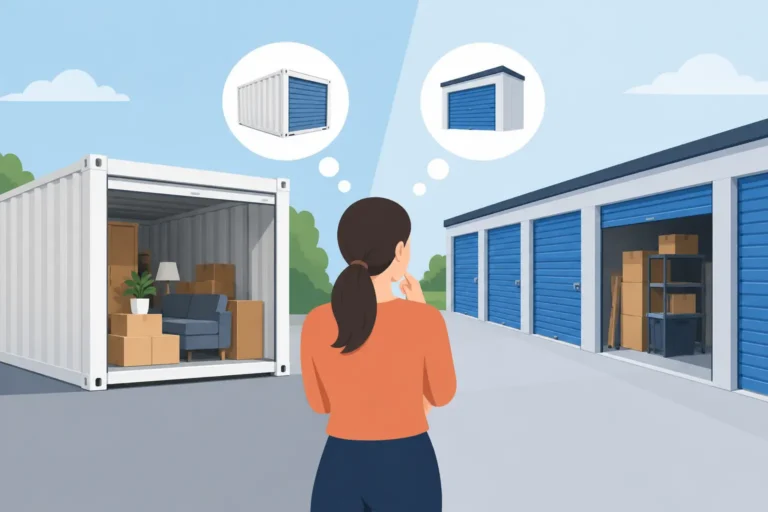
On-site portable storage containers
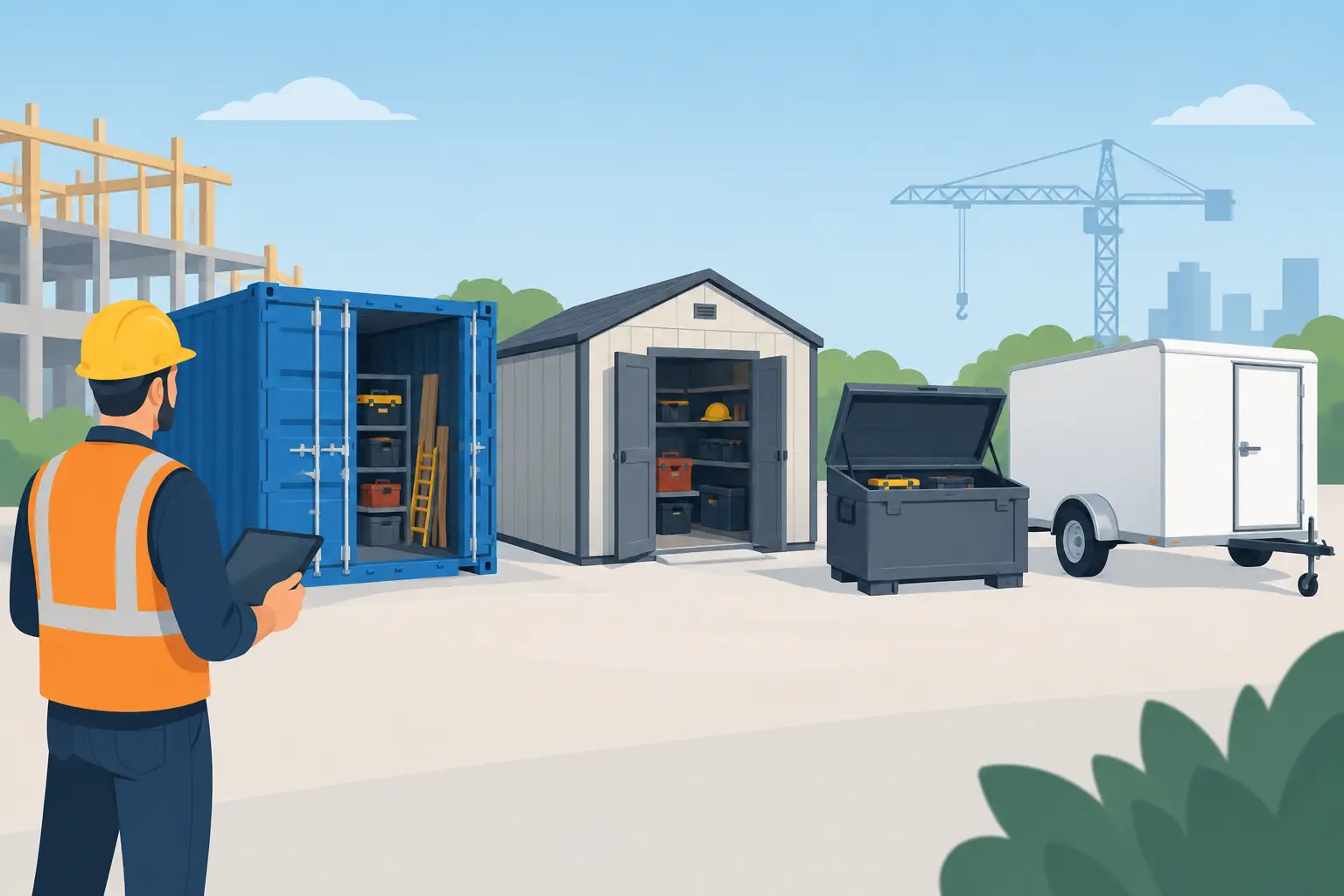
Portable storage containers are often the strongest choice for active job sites. A unit is delivered directly to the property, giving the crew a secure place for tools, materials, fixtures, and equipment within steps of the work area. That can cut down on daily loading and trips back to a warehouse or shop.
This option works particularly well for construction, renovations, trades, restoration work, landscaping, and commercial fit-outs. Contractors can use a container to separate project-specific materials from regular stock, protect items from weather, and keep the site more organized.
Security is a major advantage. A durable, lockable container creates a defined storage area that is harder to access casually than an open trailer or unsecured corner of the site. It also helps keep costly tools out of sight after hours. Contractors should still use a high-quality lock, maintain an inventory, and confirm that stored items are covered by their insurance policy.
The main trade-off is space planning. A container needs a suitable delivery area with adequate clearance and a stable surface. Before booking, confirm where the unit can sit, whether site access will be clear, and if local property rules or project requirements affect placement. For contractors throughout Kingston and Eastern Ontario, local delivery support can make that planning much simpler.
Warehouse or industrial unit rental
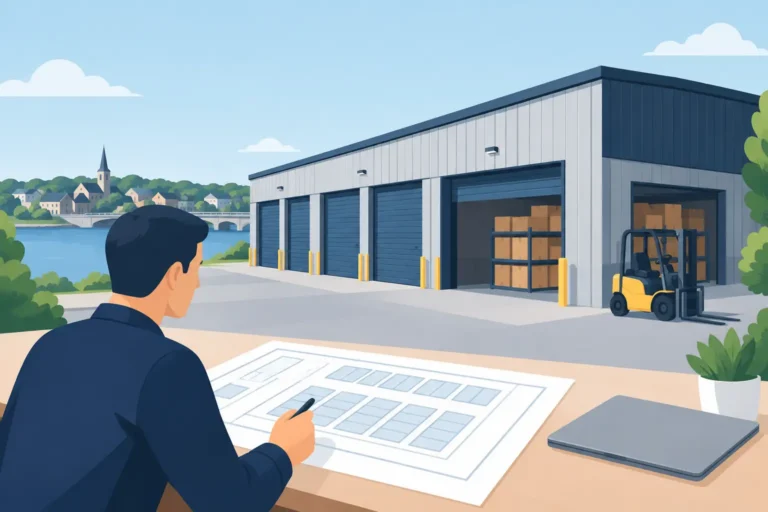
A warehouse bay or industrial storage unit makes sense when inventory volume is high or when materials need a consistent central location. This approach can work well for contractors who carry broad stock, receive frequent supplier deliveries, or need room for shelving, worktables, and equipment maintenance.
Indoor warehouse storage provides greater protection from temperature swings and moisture, which may matter for finishes, adhesives, flooring, millwork, electronics, or sensitive inventory. It can also offer better room for organized racking and receiving larger shipments.
The downside is distance. If crews need supplies daily, every trip to a central facility adds time, fuel, and coordination. Warehouse leases may also require longer commitments than a project-based rental. For many contractors, a warehouse is valuable as a base of operations, while on-site storage handles the materials and tools needed for current work.
Self-storage units
Traditional self-storage can be a reasonable fit for smaller tools, archived documents, seasonal supplies, or inventory that does not need to be at the job site. Units are often available in different sizes and can be useful when a contractor needs a controlled, off-site place to keep items between projects.
However, access can be less convenient for a working crew. Loading tools into vehicles each morning and returning them each evening creates more handling and more chances for something to be misplaced. Many facilities also have restrictions around equipment, materials, business activity, or hours of access, so it is worth reviewing the rental agreement carefully.
Self-storage is best treated as an off-site backup or a home for lower-turnover items, rather than the primary storage solution for a busy site.
Trailers and enclosed work vehicles
Enclosed trailers and service vehicles are essential for transporting tools and smaller materials, and they can provide short-term storage during the workday. They are especially useful for trades that need to carry specialized equipment from one call to the next.
But a vehicle or trailer has limits. Interior space disappears quickly, organization can become difficult, and parking it overnight may introduce security concerns. Using a trailer as the only storage plan can also leave crews spending too much time loading and unloading.
A practical setup is often to keep frequently used hand tools in the vehicle while storing bulk materials, larger equipment, and project-specific supplies in an on-site container. This gives the crew daily mobility without making the truck or trailer carry everything.
Choose Storage by Project Timeline
Storage needs change as a project progresses. Early stages may require space for demolition equipment, tools, and protective materials. Later stages may call for secure storage of fixtures, flooring, cabinetry, hardware, or finishing supplies that need to stay clean and dry.
For short projects, flexibility matters most. A portable container rental can provide secure space without committing to a long warehouse lease. For longer work, it is worth considering whether the storage plan can remain useful as materials and equipment change. A container with enough room to reorganize can be more valuable than one that is full on day one.
Contractors should also think about supplier timing. If materials arrive before the site is ready, nearby secure storage can prevent damage and keep the property clear. If deliveries are staged throughout the project, an on-site unit can make it easier to receive, check, and protect items until installation.
Security and Access Should Work Together
The most secure option is not always the most useful if the crew cannot access what it needs at the right time. Look for a solution that balances controlled entry with practical availability for authorized workers.
Good storage practices include assigning responsibility for keys or access codes, keeping an up-to-date tool and material list, and storing higher-value equipment toward the back or behind larger items. Avoid leaving a container or trailer unlocked while the site is unattended, even for a short period. Basic habits prevent many costly problems.
Organization also supports security. When materials have designated areas, it is easier to notice missing tools, duplicate purchases, or supplies running low. Shelving, labelled bins, and a clear walkway can turn a storage unit from a pile of supplies into a working part of the job site.
Cost Is More Than the Monthly Rental
A low monthly rate does not always mean lower operating costs. Consider the labour hours spent collecting materials, the fuel used for extra trips, the cost of damaged supplies, and the risk of tools being left exposed. Those costs add up quickly across several crew members and several weeks.
On-site portable storage can be cost-effective when it prevents repeated travel and keeps materials protected where they are needed. Warehouse space may be worth the higher commitment when a contractor needs inventory management, large-scale receiving, or room to support multiple crews. The right answer depends on how storage affects the daily workflow, not just the line item on the invoice.
Ask providers about delivery, pickup, rental terms, access expectations, and unit dimensions before making a decision. A clear quote should help you compare the real cost of each option without surprises.
A Practical Choice for Active Sites
For many contractors, the best arrangement is not one storage format used for everything. A central shop or warehouse may support the business overall, while an on-site container keeps the current project supplied and secure. Trailers and vehicles then carry the essential tools crews need throughout the day.
GoBox Portable Storage provides local contractors with container storage delivered to their location, helping keep job-site materials and equipment close at hand for as long as the project requires. Choosing a storage plan that matches the work – rather than forcing the work to fit the storage – gives your crew more time to focus on the job in front of them.