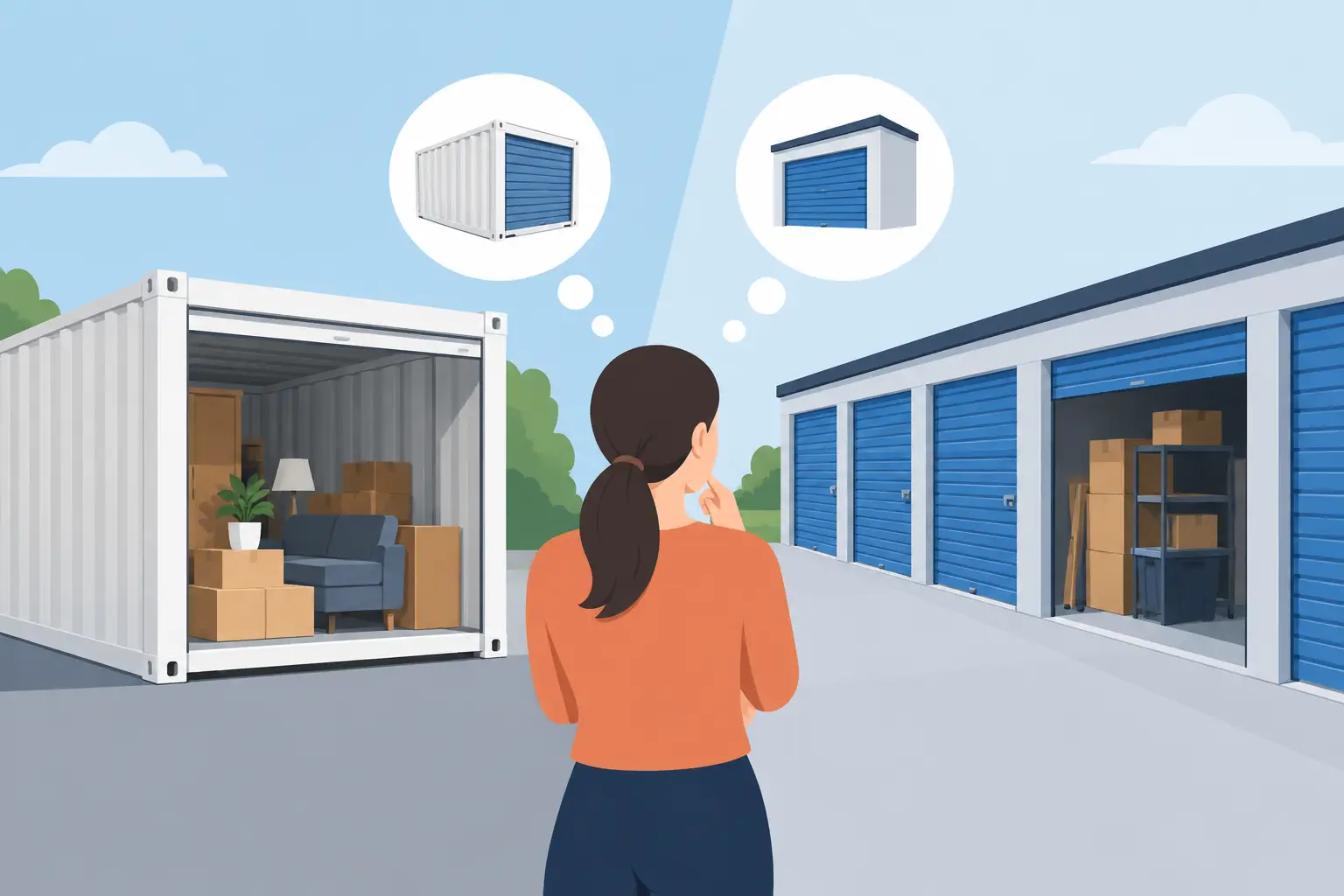
A renovation contractor needs tools close to the job site. A retailer needs room for seasonal stock without crowding the back room. A homeowner needs household items out of the way while work is underway. In each case, the C-can vs self storage decision comes down to one practical question: is it easier to bring your items to storage, or bring storage to your location?
Both options can protect valuable belongings and create breathing room. The better fit depends on where you need access, how often you will use the space, the amount you are storing, and whether your property can accommodate a container.
C-Can vs Self Storage: The Core Difference
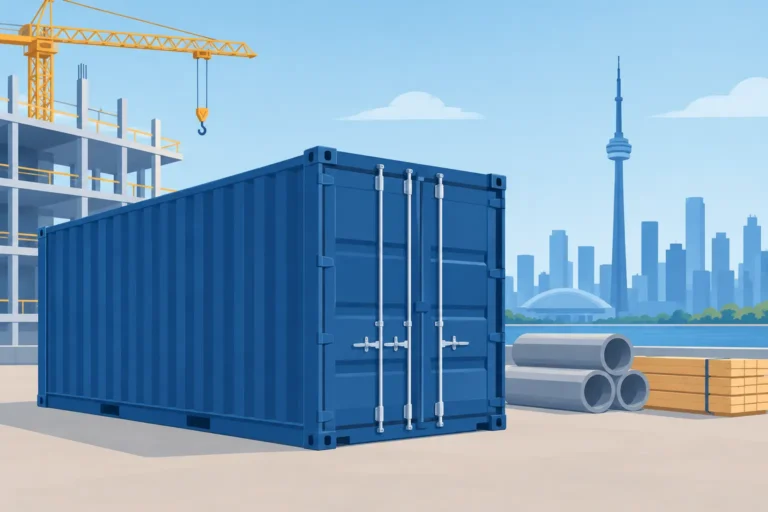
A C-can, often called a shipping container or portable storage container, is delivered to your property, worksite, or approved commercial location. It stays there for the length of your rental, putting your stored items within reach without a separate trip across town.
Self storage places your belongings in a unit at a storage facility. You bring items to the site, unload them into the unit, and return whenever you need access during the facility’s available hours. Some facilities offer drive-up units, while others require hallways, elevators, or carts.
Neither format is automatically better. A container is often the practical choice when storage needs to support day-to-day work or an active household project. A self-storage unit may suit someone who does not have a suitable delivery location or prefers to keep stored items away from their property.
When an On-Site C-Can Makes More Sense
The main advantage of a C-can is proximity. When the container is on your property, loading can happen in stages rather than in one long day. You can pack carefully, retrieve something when plans change, and keep the project organized without repeatedly loading a vehicle.
For home improvements, this can mean keeping furniture, boxes, and materials protected while rooms are being updated. Having a container outside can reduce clutter indoors and eliminate the need to transport every item to a facility and back again.
For contractors and industrial operators, on-site storage can support a more efficient workday. Tools, equipment, supplies, and materials can remain near the crew rather than being carried back and forth from an off-site unit. That is particularly useful on longer projects where access to inventory affects scheduling.
Retailers, restaurants, and other local businesses may also benefit during busy periods. A C-can can create overflow room for seasonal inventory, fixtures, packaging, or archived materials without committing to additional commercial floor space.
Access is often the deciding factor
Think about how frequently you will need the contents. If you expect to access equipment several times a week, or if your household project will unfold over several weeks, an on-site container keeps the process simple. You control when you load and retrieve items, without building a facility trip into the day.
That convenience has a practical value beyond time. Fewer transport trips can mean less handling of furniture, inventory, tools, and boxes. Less handling can also reduce the chance of scuffs, misplaced items, and rushed loading.
Space and placement need consideration
A C-can needs a safe, reasonably level delivery area with enough clearance for the delivery vehicle. Before arranging a rental, consider the width of the driveway or lane, overhead branches and wires, surface conditions, gates, and turning room.
For some residential properties, a driveway is an ideal location. For others, limited access, shared lanes, condo rules, or municipal requirements may make a container impractical. Commercial sites may have more room, but they can still have site rules, fire routes, customer parking needs, or permit requirements to review.
A dependable portable storage provider should discuss placement before delivery. GoBox Portable Storage works with customers across Eastern Ontario to assess practical access and help identify a suitable location before the container arrives.
When Self Storage Is the Better Option
Self storage is useful when keeping a container on-site is not possible or not desirable. Apartment residents, people with limited parking, and businesses in dense commercial areas may not have a safe place for a delivered unit. In those situations, a facility unit provides storage without taking up space at home or at work.
It can also be a sensible choice for long-term items that you rarely need. If you are storing documents, collectibles, extra furnishings, or seasonal belongings that only come out once or twice a year, a facility may be perfectly adequate.
Facility storage may offer a range of unit sizes in one location, which can be helpful when you only need a small amount of space. It may also suit people who prefer a dedicated storage destination separate from their home or business.
The trade-off is transportation. You will need to load items, drive them to the facility, unload them, and repeat that process whenever you need something. For a small number of boxes, that may be easy. For tools, heavy furniture, or frequent inventory access, it can become time-consuming.
Compare the Real Cost, Not Only the Monthly Rate
The monthly rental price matters, but it should not be the only figure in your decision. Compare the full effort and expense associated with each option.
With self storage, factor in fuel, vehicle use, potential truck rental, time spent loading and unloading, and the number of facility trips you expect to make. A lower monthly rate can be less appealing if regular access creates repeated transportation costs or takes staff away from productive work.
With a C-can, consider the rental period, delivery and pickup arrangements, and whether your site can support placement. If the container avoids several trips and supports easier access throughout a project, its value may be greater than the monthly price alone suggests.
For businesses, the calculation is even broader. If staff can access supplies on-site rather than leaving the job site or store, the storage choice can affect labour time, scheduling, and customer service.
Security and Protection: Questions to Ask
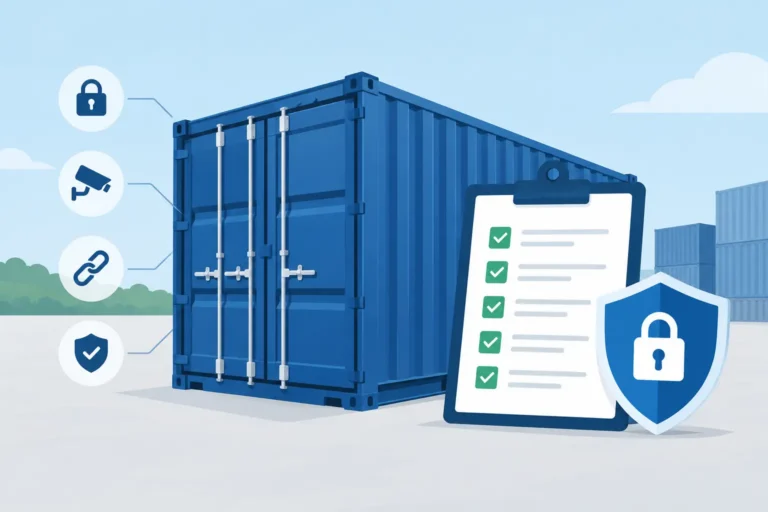
A well-built storage solution should help protect your contents, but security depends on more than the type of unit. Ask how the unit is constructed, what locking options are available, who can access it, and what site conditions could affect the contents.
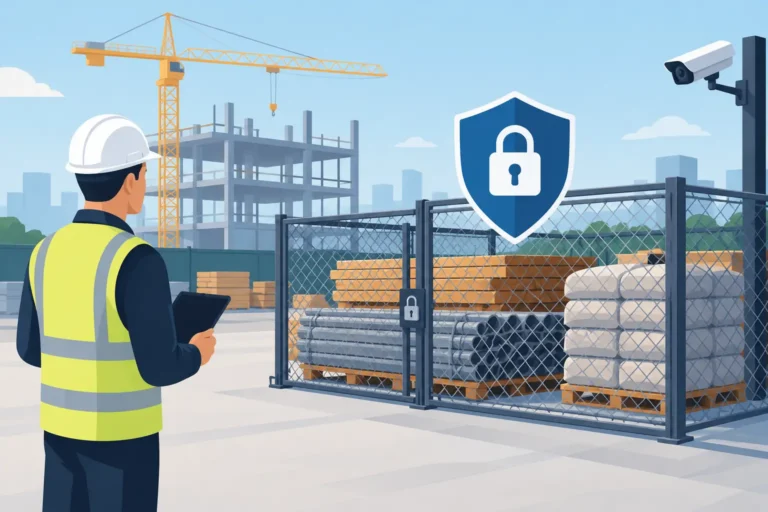
A C-can is typically made of steel and can be secured with an appropriate lock. Because it sits on your property, you can keep an eye on it and control who has access. However, the container is only as secure as its placement, locking practice, and surrounding site conditions.
Self-storage facilities may offer gates, cameras, lighting, and controlled entry. Those features can be valuable, but policies and access arrangements vary by facility. Ask about hours, individual unit locks, insurance expectations, and what security measures are actually in place rather than assuming all facilities operate the same way.
For either option, pack thoughtfully. Keep an inventory, label boxes clearly, place frequently needed items near the door, and avoid storing prohibited or hazardous materials. Protect furniture with covers and use pallets or shelving where appropriate to keep items organized and off the floor.
Choose Based on Your Working Reality
Choose a C-can when convenience at your location is the priority, when you expect frequent access, or when the storage need is tied to an active renovation, retail season, or job site. It is especially useful when transporting items repeatedly would add unnecessary work.
Choose self storage when your property cannot accommodate a container, when off-site storage suits your routine, or when you are storing a smaller volume of items with limited access needs. It can be a straightforward answer for long-term belongings that do not need to be close at hand.
Before deciding, stand where the storage would go and picture the next few weeks or months. Consider every time someone will need a tool, a box, a fixture, or a piece of inventory. The right storage option is the one that makes those ordinary moments easier, safer, and more manageable.