A storage container can make a renovation, cleanup, inventory change, or long-term storage project far more manageable – but only if it is packed with a plan. Knowing how to pack a storage container properly helps protect your belongings, use the available space well, and keep the items you need within reach.
The goal is not to fill every open inch as quickly as possible. A well-packed container is balanced, stable, dry, and organized around how often you will need access. A few extra minutes of preparation can prevent damaged furniture, crushed boxes, and frustrating searches later.
Start Before the Container Arrives
Before loading begins, decide what is going into storage, what needs regular access, and what should stay elsewhere. This is especially useful during home renovations, retail inventory changes, and job-site projects, where certain tools or supplies may be needed every day.
Create a simple inventory as you sort. It does not need to be complicated. Numbering boxes and keeping a note on your phone or a paper list is enough. Record the box number, general contents, and where it is placed in the container. Clear labels on at least two sides of every box will save time when boxes are stacked.
It also helps to prepare a loading area close to the container. Group items by size and weight so heavy pieces are ready first, followed by sturdy boxes, lighter boxes, and soft items. Keep packing materials nearby, including furniture covers, blankets, stretch wrap, tape, labels, and sturdy boxes.
Before you begin, check each item for moisture, dirt, or loose parts. Store belongings clean and dry. Damp fabrics, wet tools, or boxes brought in from rain can introduce moisture that affects surrounding items over time.
How to Pack a Storage Container in the Right Order
Start at the front of the container and work toward the doors. Load the largest and heaviest items first, placing them along the walls whenever possible. Large furniture, appliances, worktables, shelving, and heavy boxed materials form the foundation for the rest of the load.
Distribute weight from side to side. If all heavy items are placed on one wall, the load can become awkward and less stable. Spread weight evenly across the floor, and avoid stacking heavy boxes on top of lighter ones. Think of the container as a set of solid layers rather than one large pile.
Place the items you will not need often toward the front. Items needed weekly or daily should stay near the doors. For example, a contractor may keep commonly used tools and supplies near the entrance, while surplus materials can sit farther inside. A retailer may place current stock near the doors and seasonal inventory deeper in the container.
Do not leave loose gaps between large pieces. Open spaces allow items to shift or lean. Fill smaller gaps with sturdy, labelled boxes, wrapped chairs, cushions, or other soft items that can act as padding. The aim is a firm load with no unstable towers.
Build Stable Box Stacks
Boxes are easiest to stack when they are similar in size and made from strong corrugated cardboard. Put the heaviest boxes on the bottom, medium-weight boxes in the middle, and lighter boxes at the top. Keep each stack level. A box that bulges, bows, or has an unsecured bottom should not support weight.
Avoid packing boxes so heavily that they cannot be lifted safely. Books, hardware, dishes, and paper files become heavy quickly. Split dense items between several smaller boxes rather than using one oversized box that may tear or become difficult to handle.
Plastic totes can be useful for tools, cables, seasonal items, and supplies that need extra protection from dust. However, not every tote is designed to carry heavy weight when stacked. Check that lids sit flat and that the sides are not cracking before placing other items on top.
Protect Furniture, Equipment, and Fragile Items
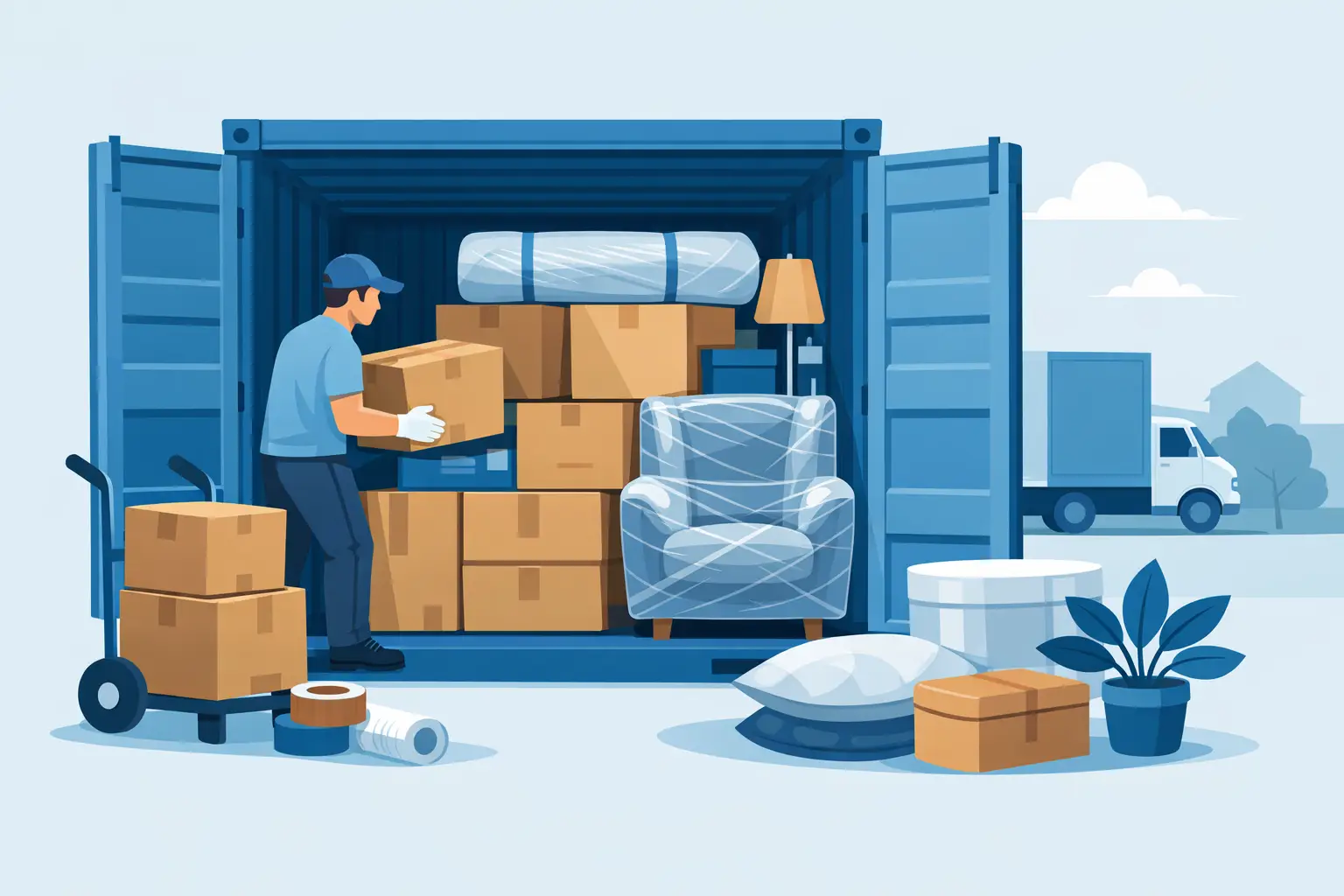
Wrap furniture before it enters the container. Blankets, protective covers, and stretch wrap help prevent surface scratches and rubbing between items. Cover wood and upholstered pieces fully, especially if they will sit beside metal shelving, tools, or boxed materials.
Take apart furniture when it makes practical sense. Table legs, shelving components, and bed frames often pack more efficiently when disassembled. Keep screws, brackets, and small hardware in sealed, labelled bags, then tape or secure the bag to the corresponding item. Do not place loose hardware in a general box where it can be difficult to find.
For fragile items, use proper boxes and fill empty space inside each carton. Glass, dishes, electronics, and framed items should not be able to shift within their packaging. Mark these boxes clearly and place them where they will not carry weight from other items.
Tools and equipment need the same attention. Secure sharp edges, drain fuel or fluids where applicable, and pack smaller components together. Heavy equipment should sit directly on the container floor, never on top of boxes or furniture.
Leave an Access Path When You Need One
A completely packed container may use every bit of floor space, but it can be impractical if you expect frequent access. In that case, leave a narrow centre aisle or a clear path along one side. This gives you a route to reach labelled boxes, tools, records, or stock without unloading half the container.
The trade-off is straightforward: an aisle uses space, but it saves time. For short-term storage of items you will not need, packing tightly from wall to wall may be the best choice. For active business storage, renovation supplies, or equipment that comes and goes regularly, access is usually more valuable than maximum density.
Shelving can also help when small items need to remain visible and easy to retrieve. Keep shelves secure and avoid overloading them. Store heavier items on lower levels and lighter supplies higher up.
Secure the Load Before Closing the Doors
Once loading is complete, walk through the container carefully. Check for leaning stacks, unsupported furniture, loose boxes, and items that could fall when the doors are opened. Use load straps or rope where appropriate to hold large pieces and box stacks in place. Securement is particularly useful near the door end, where items may have less support from surrounding contents.
Keep the container floor clear of loose packaging, nails, cords, and small tools. These create trip hazards and can damage stored items if stepped on or pressed under a box. Close and lock the doors securely after each visit.
For longer storage periods, inspect the container occasionally. Look for signs of moisture, pests, damaged boxes, or shifting loads. Seasonal temperature changes in Eastern Ontario can be hard on sensitive materials, so paper records, photographs, electronics, and delicate fabrics deserve added protection and thoughtful placement.
GoBox Portable Storage brings secure storage space directly to your location, giving you time to load in an order that suits your project rather than rushing through a single day. Pack steadily, protect the items that matter most, and leave yourself the access you will genuinely need.